
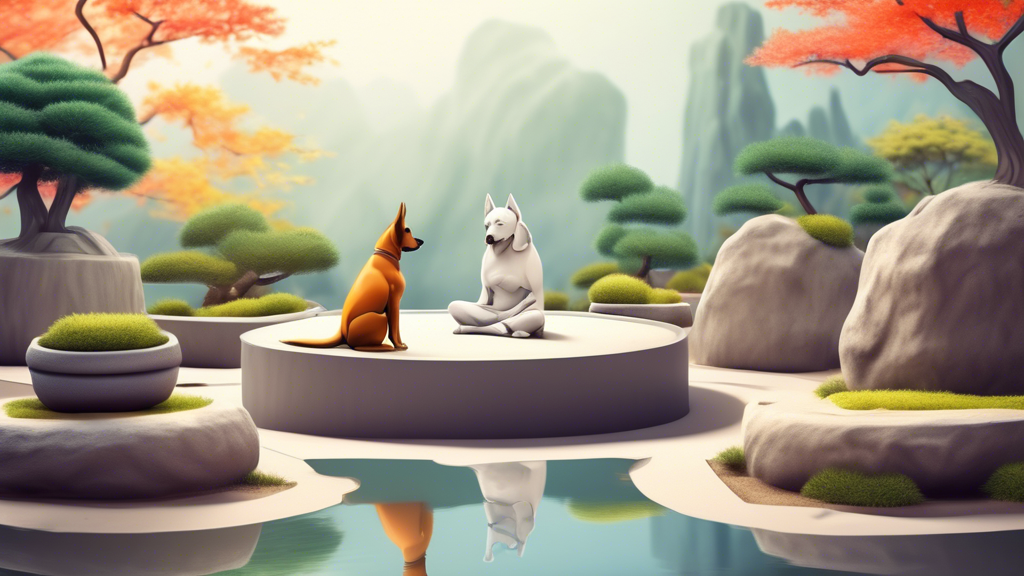
Achieving Canine Tranquility: Why It Matters
In today’s fast-paced world, even our canine companions can experience stress and anxiety. From bustling city streets to unfamiliar environments, dogs encounter a myriad of stimuli that can trigger unease. Teaching your dog to find their inner zen is not just about having a well-behaved pet; it’s about promoting their overall well-being and strengthening your bond.
Understanding Canine Stress: Beyond the Bark
Dogs might not verbalize stress in the same way humans do, but their body language speaks volumes. Recognizing the subtle signs of anxiety is crucial in addressing the issue before it escalates. For instance, a normally playful Golden Retriever might suddenly become withdrawn, or a confident German Shepherd might start excessively licking their paws when left alone.
Common Signs of Stress in Dogs:
- Excessive panting or drooling, especially when not hot or exercising.
- Whining, barking, or howling more than usual, such as a continuous low whine for 10-15 minutes after you leave.
- Pacing or restlessness, often in repetitive patterns like walking circles in a room.
- Trembling or shaking, even in a warm environment.
- Yawning excessively (when not tired), a common displacement behavior.
- Licking lips repeatedly, often in quick, small licks.
- Avoiding eye contact or turning their head away, especially when approached.
- Tucking their tail between their legs, often accompanied by a lowered body posture.
- Destructive behavior like chewing furniture, digging at carpets, or tearing up bedding, particularly when left alone for 30 minutes or more.
- Changes in appetite (refusing food or eating excessively) or bathroom habits (accidents indoors).
The Foundation of Tranquility: Building a Secure Environment
A calm and stable environment is paramount to a dog’s sense of security. This starts with providing basic needs consistently.
Key Elements of a Secure Environment:
- Safe Space: Designate a comfortable and quiet area where your dog can retreat when feeling overwhelmed. This could be their crate, a dog bed, or even a specific corner of a room. For a nervous Chihuahua, a covered crate with a soft blanket might be ideal, while a Great Dane might prefer a large orthopedic bed in a quiet den.
- Predictable Routine: Dogs thrive on routine. Establish a regular schedule for feeding, walks, playtime, and sleep. For example, feeding your dog at 7 AM and 6 PM, walking at 7:30 AM, 1 PM, and 7 PM, and a consistent bedtime helps a dog like a Labrador Retriever feel secure. This predictability fosters a sense of security.
- Physical Exercise: A tired dog is a happy dog. Regular physical activity not only expends energy but also releases endorphins, which have mood-boosting effects. A young Border Collie might need 60-90 minutes of vigorous exercise daily, like fetch or running, while a senior Basset Hound might be content with two 20-minute leisurely walks. Consult our Daily Dog Exercise Planner for tailored recommendations.
- Mental Enrichment: Keep your dog mentally stimulated with puzzle toys, interactive games, and training sessions. Mental exercise can be just as tiring as physical activity and helps prevent boredom, which can lead to problem behaviors. A 15-minute session with a KONG filled with frozen peanut butter or a snuffle mat can be as exhausting for a Pug as a brisk walk. Explore our guide on Dog Mental Stimulation for more ideas.
Essential Skills for Canine Tranquility
Just like humans, dogs benefit from learning techniques to manage stress and anxiety. Here are some valuable skills that can significantly contribute to your dog’s inner peace:
1. Basic Obedience Training: The Power of Structure
Teaching basic commands like "sit," "stay," "come," and "down" provides your dog with a sense of structure and predictability. This predictability, in turn, can reduce anxiety. When a dog understands what’s expected of them, they feel more confident and secure. For a 4-month-old puppy, start with 5-minute training sessions daily, focusing on one command at a time, using high-value treats like small pieces of boiled chicken.
2. Leash Training: Walking the Path to Calm
Leash training is not just about preventing your dog from pulling you down the street; it’s about establishing control and communication during walks. A well-trained dog on a leash is less likely to react impulsively to external stimuli, creating a more peaceful experience for both of you. Begin with a 6-foot leash and a flat collar or front-clip harness. Practice in a quiet area, rewarding your dog every few steps for walking calmly beside you without pulling.
3. Crate Training: A Safe Haven, Not a Confinement
A crate, when introduced correctly, can be a powerful tool for canine tranquility. It provides a safe space where your dog can retreat to relax, de-stress, and enjoy some alone time. Never use the crate as punishment. For a puppy, start with short periods (5-10 minutes) with the door open, feeding meals inside the crate, and gradually increasing duration. Learn more about How to Crate Train a Dog for step-by-step instructions.
4. Socialization: Navigating the World with Confidence
Proper socialization during puppyhood (ideally between 8 and 16 weeks of age) is crucial for developing a well-adjusted adult dog. Exposing your dog to various sights (e.g., people with hats, umbrellas), sounds (e.g., traffic, vacuum cleaners), people (e.g., children, elderly), and—most importantly—other dogs in a positive and controlled manner helps them build confidence and reduce fear of the unknown. Enroll your 10-week-old puppy in a reputable puppy class for safe, supervised interactions.
5. Alone Time Training: Fostering Independence
While we cherish the bond with our furry friends, it’s equally important to teach them to be comfortable alone. Gradually acclimate your dog to short periods of solitude, rewarding them for calm behavior. Start by leaving your dog alone for 5 minutes, then 15, then 30, always returning before they show signs of distress. This prevents separation anxiety and promotes a sense of independence. A camera can help you monitor their behavior while you're out.
Advanced Techniques for Deepening Tranquility
Once your dog has mastered the basics, consider exploring these advanced techniques to elevate their tranquility to new heights:
1. Desensitization and Counterconditioning: Changing Negative Associations
If your dog exhibits fear or anxiety towards specific triggers, desensitization and counterconditioning can be incredibly effective. This involves gradually exposing your dog to the trigger at a low intensity, pairing it with positive reinforcement like treats or praise. For example, if your dog fears thunderstorms, play a very low-volume recording of thunder while giving them high-value treats (e.g., cheese, hot dogs). Slowly increase the volume over weeks or months, always ensuring your dog remains relaxed. Over time, your dog learns to associate the once-feared stimulus with something positive.
2. Trick Training: Engaging the Mind, Calming the Soul
Trick training goes beyond basic commands, providing mental stimulation and boosting your dog’s confidence. Teaching your dog fun tricks like "shake paws," "play dead," or "fetch specific toys" engages their mind, tires them out mentally, and strengthens your bond. A 15-pound (7 kg) Terrier mix might love learning to "spin" or "bow," while a 70-pound (32 kg) German Shepherd might excel at more complex tasks like "find the remote."
3. Dog Sports: Channeling Energy, Building Teamwork
For high-energy dogs, participating in dog sports can be a fantastic outlet for their physical and mental energy. Agility, obedience, rally, and flyball are just a few examples of sports that provide structure, challenge, and bonding opportunities—all of which contribute to a more tranquil state of mind. A young Australian Shepherd, for instance, might thrive in agility, burning off excess energy and focusing their intelligence.
4. Massage and Touch: The Power of Physical Connection
Just like humans, dogs can benefit from the calming effects of touch. Regular massage can help relieve muscle tension, reduce stress hormones, and promote relaxation. Start by gently stroking your dog's head and neck, then move to their shoulders and back, using slow, circular motions. Observe their reactions; if they lean into your touch and sigh, you're doing it right. This is especially beneficial for senior dogs who might have aches and pains.
Seeking Professional Guidance
If your dog exhibits severe anxiety or you’re struggling to address their behavioral issues, don’t hesitate to seek professional help. A certified professional dog trainer or a veterinary behaviorist can assess your dog’s specific needs and develop a tailored training plan. For medical concerns, always contact your veterinarian.
Finding the Right Professional:
- Certified Professional Dog Trainer (CPDT-KA): These trainers have met specific education and experience requirements and adhere to a code of ethics. They can help with general obedience, leash reactivity, and mild anxiety.
- Veterinary Behaviorist (DACVB): These are veterinarians who have undergone additional training and certification in animal behavior. They can diagnose and treat behavioral disorders, and in some cases, prescribe medication. They are the ideal choice for severe separation anxiety, phobias, or aggression.
A Lifelong Journey of Tranquility
Achieving canine tranquility is not a destination; it’s an ongoing journey of understanding, patience, and consistency. By investing time and effort into building a secure environment, teaching essential skills, and addressing any underlying anxiety, you can help your furry friend navigate the world with confidence and embrace a state of inner peace. The bond you share will deepen, and the joy you both experience will be immeasurable.
Written and reviewed by the Doggie General editorial team. This article is general information for dog owners, not veterinary advice. If your dog is unwell or you are worried about its health or behavior, contact your veterinarian. When you buy through links on this site we may earn a commission.