
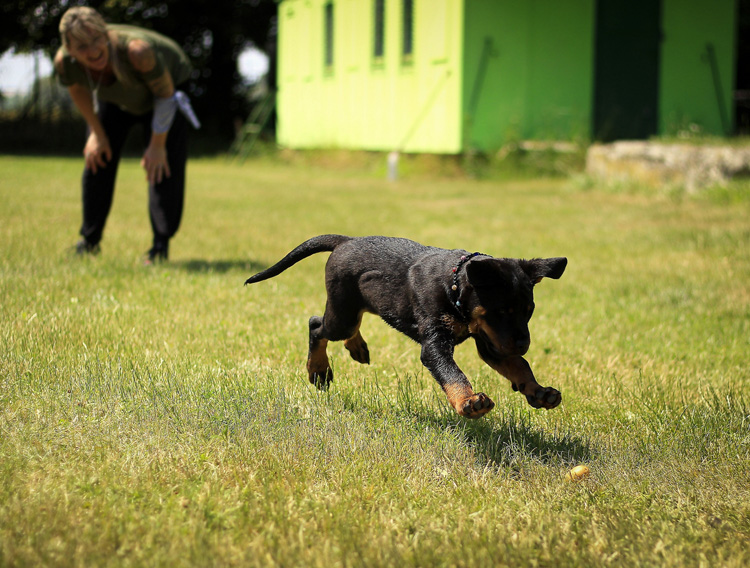
Brain Train Games For Dogs
In this free training you will learn how to play “The Airplane Game,” which is one of the games from my Brain Training for Dogs online dog training course. It is designed to improve your dog’s ability to pay attention to you despite distractions. If you enjoy this game, be sure to check out the full course.
This little brain game will teach your dog that looking into your eyes is what magically grants him a treat. Whether you own a puppy (e.g., an 8-week-old Golden Retriever or a 12-week-old French Bulldog), an adult dog (like a 3-year-old Labrador weighing 65 lbs), or a rescue dog of any age, this game is a great way to bond and help him view you as a source of rewards and pleasure! It also improves your dog’s ability to pay attention to you despite distractions, a crucial skill for any dog owner. For more foundational training tips, consider reading our article on What Is The First Thing You Should Train Your Dog To Do.
The Airplane Game: Step-by-Step
The Airplane Game is a simple yet powerful exercise that builds focus and strengthens the bond between you and your dog. It’s particularly effective for dogs who are easily distracted or those who need a confidence boost in new environments. This game can be played for 5-10 minute sessions, 2-3 times a day, for optimal results.
- Preparation: Find a quiet, low-distraction environment. This could be your living room or a fenced backyard. Have a handful of high-value, pea-sized treats ready – think small pieces of cooked chicken, cheese, or store-bought training treats. For a 20 lb dog like a Beagle, 10-15 small treats per session is usually sufficient. For larger breeds like a German Shepherd weighing 80 lbs, you might need 20-30. If you're unsure about appropriate treat sizes or daily caloric intake, our Dog Feeding Calculator can help.
- The Setup: Sit on the floor with your dog in front of you. Hold a treat in your closed fist, keeping it out of your dog’s reach but visible.
- The Waiting Game: Your dog will likely try to sniff, paw, or even bark at your hand to get the treat. Ignore these behaviors completely. Do not speak, look at your dog, or move your hand. This teaches them that those actions won't yield a reward.
- The Gaze: The moment your dog looks away from your hand and makes eye contact with you – even for a split second – immediately say a clear, calm "Yes!" or "Good!" and open your hand to give them the treat. This is the critical step. You're rewarding the *disengagement* from the distraction (your hand) and the *engagement* with you.
- Repeat and Progress: Repeat this process 5-10 times. As your dog starts to understand, you'll notice they look at your eyes more quickly. Once they consistently make eye contact, you can gradually introduce minor distractions. For example, try playing in a slightly busier room, or have a family member walk by at a distance.
Troubleshooting and Advanced Tips
- My dog isn't making eye contact: If your dog is struggling, try holding the treat closer to your face initially. You can also briefly move the treat towards your nose before moving it back to your closed fist, to subtly encourage their gaze upwards. For a puppy, like a 10-week-old Pug, this might take a few more repetitions.
- My dog is too excited: If your dog is overly excited and jumping, wait for them to settle even for a second before starting. You might need to practice a calm "sit" command first. Remember, consistency is key in all training, as discussed in To train or be trained? A dog owner’s dilemma.
- Increasing Distractions: Once your dog is proficient in a quiet environment, gradually increase the level of distraction. This could mean playing in your yard with neighborhood sounds, or even in a dog-friendly park. Always set your dog up for success by starting with low-level distractions and increasing them slowly.
- Body Language Cues: Pay attention to your dog's body language. A relaxed posture, soft eyes, and a loose tail indicate they are engaged and comfortable. If they seem stressed (e.g., yawning excessively, lip licking, tucked tail), reduce the distraction level and make the game easier.
- Integrating into Daily Life: The goal is for your dog to offer eye contact naturally. Practice this game before meals, walks, or any activity your dog enjoys. This reinforces that looking at you leads to good things.
The Airplane Game is just one example of how engaging your dog's mind can lead to a more attentive and well-behaved companion. For more ideas, check out our Daily Dog Brain Game resource.
Written and reviewed by the Doggie General editorial team. This article is general information for dog owners, not veterinary advice. If your dog is unwell or you are worried about its health or behavior, contact your veterinarian. When you buy through links on this site we may earn a commission.